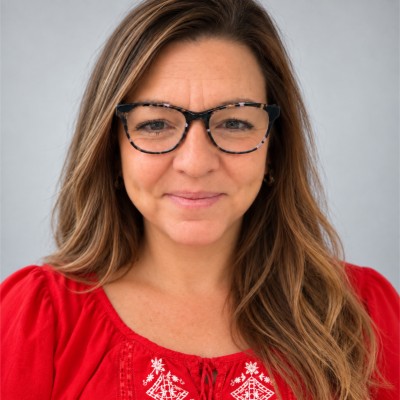
I’m a mom to three boys—Marco, 11, Matteo, 7, and Santi, 4. I’m also a community advocate and a bilingual educator with more than 20 years in education. I earned my bachelor’s degree in Spanish Language and Literature at Marquette University and my master’s in Cultural Foundations of Education at the University of Wisconsin–Milwaukee. Education has always been a huge part of my life.
But math? It wasn’t my favorite. I’m a math coach who came to this work hesitantly. I remember sitting at the table, sobbing over “six times seven is forty-two.” God bless my mother, who was a teacher herself and was doing her best to help me. I know what it feels like when the numbers don’t make sense yet.
Even with my years in education, becoming Marco’s mom taught me how much I still had to learn about helping my own children. He has been my first teacher in that journey—the child I’ve learned alongside, trying ideas, paying attention, and figuring things out together.
When Matteo was diagnosed with type 1 diabetes, math took on another meaning for our family. We use it throughout the day, every day, as part of keeping him healthy. If you’ve ever wondered when you’ll need math in real life, sometimes life answers that question in a way you never expected.
I have close friends who care deeply about their children and still don’t know where to begin with math homework. I’ve heard the worries about “new math” for years. I understand the appeal of finding a program that will take care of it. What I want families and caregivers to feel is that they have something powerful to offer, too: their curiosity, their attention, and a conversation.
As AI and machines handle more calculations, our children need to ask good questions, explain their thinking, and decide whether an answer makes sense. They need opportunities to talk about math and connect its ideas. That’s why I created this space: to give every caregiver tools to sit beside their child and make meaning together.
You don’t have to be the expert. You can be their partner. Everyone deserves the skills, confidence, and opportunity to do math.
Math is part of how we notice, make decisions, and care for one another. We are all math people—even when we’re still finding our confidence.